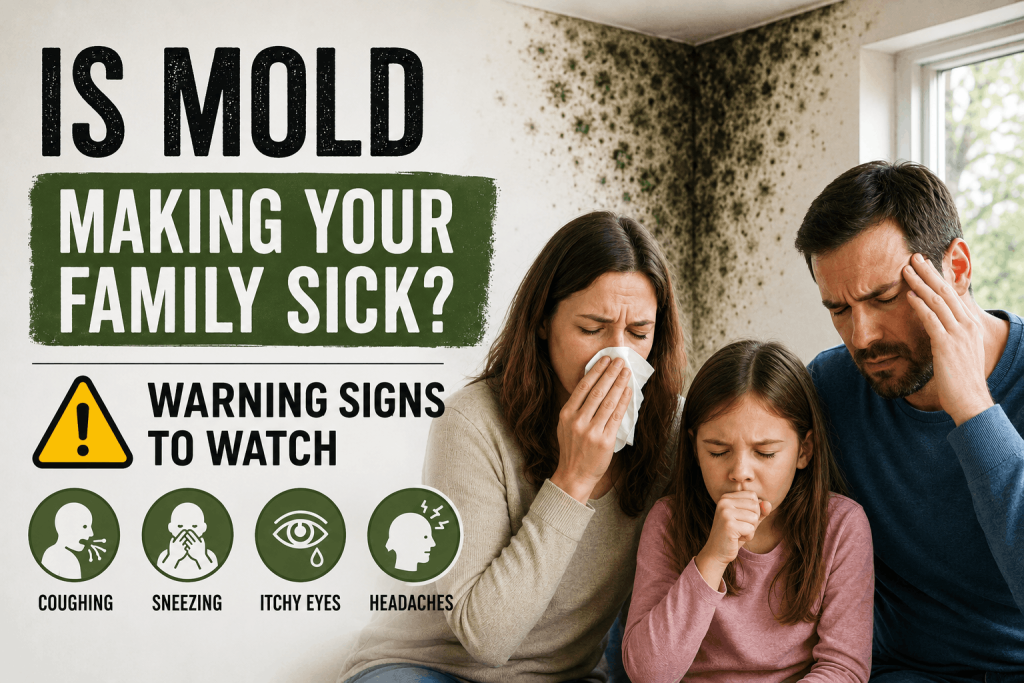
A musty smell. A dark patch around the bathroom window. A cough that keeps coming back. If those things are happening in your Los Angeles home, it is reasonable to wonder whether mold is affecting your family.
Mold does not automatically make everyone sick, and many symptoms have other causes. Still, damp indoor environments are associated with respiratory and allergy-related problems, including coughing, wheezing, nasal symptoms, and asthma symptoms.
So, what should you actually watch for? Here are 10 warning signs that deserve attention.
1. Your Nose is Constantly Stuffy
Congestion that seems worse at home can be an important clue. Mold and damp indoor environments can irritate the upper respiratory tract.
Notice the pattern rather than jumping to a diagnosis. If your nose feels blocked in one room but improves after you leave, inspect that space for moisture, visible growth, or a musty smell.
2. Someone in the Family Keeps Coughing
A lingering cough can come from allergies, infections, asthma, or many other causes. Still, coughing is among the respiratory symptoms associated with damp indoor environments.
If more than one person develops similar symptoms, look at the home environment too. Hidden moisture behind drywall, flooring, or cabinets can be surprisingly easy to miss.
3. Wheezing or Breathing Irritation Gets Worse
Wheezing and shortness of breath deserve attention, particularly for anyone who already has asthma or another respiratory condition.
Research reviewed by CDC/NIOSH has found associations between damp indoor environments and respiratory effects such as wheezing and asthma symptoms.
If there is confirmed growth or extensive contamination, mold removal services may be necessary to address the property problem while medical concerns are handled by a healthcare professional.
4. Your Eyes Become Itchy or Watery Indoors
Itchy, red, or watery eyes are easy to blame on outdoor allergies, especially in Southern California. But indoor irritants can contribute too.
If your eyes repeatedly bother you in a particular room, check for visible moisture damage, condensation, or a persistent musty odor. The pattern alone does not prove mold exposure, but it is a useful reason to investigate.
5. Skin Irritation Appears Without An Obvious Trigger
Rashes or irritated skin can have countless causes, so don’t assume every skin change is connected to mold.
This is also where online claims about the “10 warning signs of mold toxicity” can become misleading. There is no universal symptom checklist that can diagnose mold-related illness. Look at the complete picture: symptoms, timing, visible conditions, and moisture history.
6. A Musty Smell Keeps Coming Back
A persistent musty odor is one household clue you shouldn’t dismiss.
You may smell mold before you find it. Growth can develop behind walls, under flooring, around plumbing, or in other damp areas. NIOSH notes that musty odors can indicate microbial contamination in damp buildings.
If cleaning removes the smell only temporarily, professional mold removal can help investigate the underlying problem instead of simply covering it up.
7. Mold Returns After You Clean It
You wipe away the spot, repaint the wall, and think the problem is finished. Then the discoloration comes back.
That repeat cycle is a red flag because mold growth is often tied to a moisture problem. EPA guidance emphasizes correcting the water or moisture source rather than treating visible growth alone.
For larger affected areas or recurring growth after water damage, mold removal services may be a better option than repeatedly cleaning the same patch.
8. Symptoms Seem Worse in One Room
This is one of the most practical clues to watch.
Maybe everyone feels fine downstairs but starts sneezing in a bedroom. Perhaps a home office triggers coughing, or symptoms become more noticeable after rain.
These patterns cannot diagnose exposure, but they can tell you where to investigate. Check bathrooms, windows, exterior walls, ceilings, HVAC areas, and places where leaks have occurred.
If the same area keeps causing concern, professional mold removal can help determine whether hidden growth or moisture is involved.
9. Your Home Recently Had Water damage
A leaking pipe, roof problem, overflowing appliance, or flood can create exactly the damp conditions mold needs.
The tricky part? A surface can look dry while moisture remains inside drywall, insulation, flooring, or other materials.
If your home has experienced significant water damage, don’t wait for visible growth. 24/7 Pro Restoration also handles water damage restoration, including assessment, water removal, drying, dehumidification, cleaning, and restoration.
10. You Feel Better When You Leave the House
If congestion, coughing, eye irritation, or other symptoms repeatedly improve when you spend time away from home, pay attention to that pattern.
It still doesn’t prove that mold is responsible. Allergens, dust, ventilation issues, and other indoor factors can create similar patterns. Persistent or serious symptoms should be discussed with a healthcare professional.
At the same time, if your home has visible growth, water damage, or a recurring musty smell, mold removal services can help determine whether the property needs professional attention.
What About “Mold Detox” and Testing?
Searches about how to “flush mold out of your body” or test for mold exposure can send homeowners down questionable paths.
There is no simple home detox that reliably removes a suspected mold exposure. Likewise, symptoms alone cannot establish that mold is the cause of an illness. If you’re concerned about your health, discuss your symptoms and exposure history with a qualified healthcare professional.
For the property itself, the practical priority is finding the moisture source and evaluating the affected area.
When Is DIY Cleanup Not Enough?
EPA guidance says homeowners can often handle small mold areas—roughly less than 10 square feet—when appropriate precautions are followed. Larger areas, extensive water damage, sewage contamination, or suspected HVAC contamination call for greater caution and may require professional help.
That’s when professional mold removal services become especially valuable. 24/7 Pro Restoration says its team provides mold inspection, testing, and remediation, with a process focused on identifying the source, containing affected areas, removing mold, and helping prevent recurrence.
If you’re dealing with a recurring issue, check our guide on mold cleanup best practices for homeowners before starting a cleanup project.
Don’t Let the Warning Signs Become Your Family’s Normal
You don’t need to panic over every dark spot on a wall. But you also don’t need to keep ignoring a musty odor, recurring growth, or health symptoms that seem connected to a particular part of your home.
For Los Angeles homeowners, professional mold removal services can be a sensible next step when the problem is extensive, hidden, or repeatedly returning. 24/7 Pro Restoration offers emergency response, assessment, mitigation, restoration, and mold-related services, with technicians available 24/7.
If your home is giving you clues, don’t keep guessing. Call 24/7 Pro Restoration at 888-439-3620 and get the situation assessed. A timely inspection could help you deal with the moisture problem now, before a small patch becomes a much bigger restoration headache.