Ask five homeowners what their mold job involves and you’ll hear five different stories: a few hours behind a bathroom wall for one, weeks of drying and rebuilding for another. That’s because mold remediation isn’t a standard package. It’s a response to a specific situation, and every variable changes the scope of work.
This guide walks through those variables, so when an estimate lands in your inbox you can see why it looks the way it does, and what you can do to keep your own situation smaller.
It’s Scope, Not Just Mold
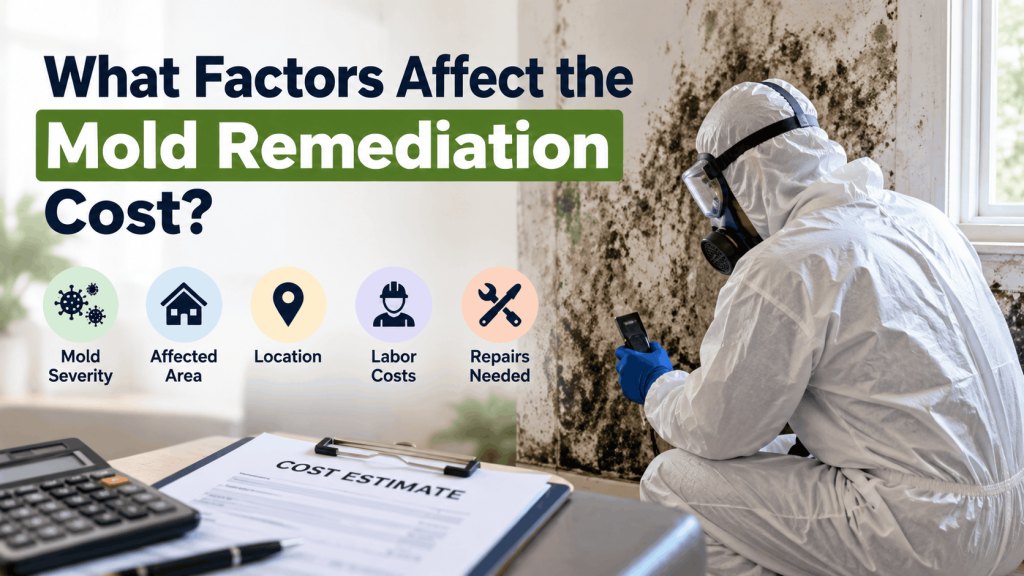
The visible mold is only the surface of the job. What drives the work is how much has to be contained, removed, dried, and rebuilt. Think of scope as how big, how deep, how hidden, and how much damage came along with it.
The Factors That Shape the Job
Size of the Affected Area
A patch the size of a dinner plate is a different job from a stain across a wall. The EPA treats areas larger than roughly 10 square feet as professional territory, since bigger areas call for more containment, labor, and time.
Where It’s Growing
An exposed ceiling is easy to reach. A wall cavity, attic, crawl space, or the area around HVAC ducts is not. Hidden growth often means opening surfaces to find where it ends.
Which Materials Are Involved
Tile and glass can usually be cleaned. Porous materials like drywall, insulation, and carpet generally have to be removed and replaced. If you wonder why scrubbing and sprays aren’t enough, check out our guide on bleach mold removal.
The Moisture Source
Mold grows where water lingers, so the leak, condensation, or roof issue behind it matters as much as the mold. Repairs to plumbing or the building envelope are often separate trades. If the source isn’t fixed, mold remediation is only a pause.
How Long It’s Been There
The EPA notes that mold can start growing on damp materials within 24 to 48 hours. The longer moisture lingers, the further growth can spread, and the more material may be affected.
The Type of Water
Clean water from a supply line is different from contaminated water from a sewage backup or flood. Contaminated water adds safety steps and stricter removal rules.
Containment and Safety Measures
Professionals seal off work areas with barriers, use air filtration, wear protective gear, and control demolition so spores don’t travel through the house. Larger or more complex jobs need more of this, and it’s not an area to cut corners.
Drying Time
Mold remediation isn’t finished when the mold is gone. Materials need to dry to safe moisture levels before anything gets rebuilt, and drying time depends on materials, humidity, and the equipment used.
Testing and Verification
Visual inspection and moisture readings are standard. Air or surface sampling isn’t always necessary, and the EPA doesn’t generally recommend routine sampling, but it can help with documentation, insurance, or specific health concerns.
Rebuild and Repairs
Removing drywall means replacing, finishing, and painting it. Flooring, baseboards, and cabinetry may be involved. Some estimates include rebuilding and others don’t, so ask.
Belongings and Property Type
Furniture, clothing, and other contents may need to be moved, cleaned, or stored. Condos and multi-unit buildings add shared walls, association rules, and access limits.
Insurance
Policies often cover mold only when it results from a sudden, covered event, such as a burst pipe, and may exclude long-term leaks or maintenance issues. Limits vary, and documentation matters, so read your policy and report early. 24/7 Pro Restoration works directly with insurance companies.
Why Los Angeles Adds Its Own Variables
Older plumbing, windowless bathrooms, hillside crawl spaces, coastal humidity, and shared-wall condos all shape where hidden moisture shows up. Mold removal services in Los Angeles that know local building types can anticipate those trouble spots instead of discovering them midway through the job.
How to Compare Estimates Fairly
Two mold remediation estimates can look very different because they cover different scopes. Ask each company:
- How was the affected area measured?
- Does the plan address the moisture source, or only the mold?
- What containment and safety measures are included?
- Which materials will be removed?
- Does the estimate include rebuilding?
- How will you verify the work at the end?
- What’s excluded?
Asking the same questions of mold removal services in Los Angeles lets you compare like with like.
Moves That Keep the Job Smaller
- Stop the water: Shut off the supply if it’s safe to do so
- Dry quickly: Wet materials dried within a day or two are less likely to grow mold
- Leave it alone: Disturbing growth can spread spores
- Document: Take photos and note dates
- Call early: Early action keeps mold remediation smaller and simpler
Red Flags to Watch For
- A quote without any inspection
- Promises that mold will “never” return
- No plan for the moisture source
- Pressure to sign right away
- A vague, unwritten scope
Know What Your Job Really Involves
Every mold situation has its own scope, and the clearest way to understand yours is to have someone look at it. Share your photos and what you’ve noticed with 247 Pro Restoration. The team can trace the moisture, explain what’s involved, and put the plan in writing, with mold removal services in Los Angeles built around your home and a mold remediation plan that makes sense for it