Grab any cleaning supply under your sink, and there’s a decent chance you’ve wondered whether it actually kills mold or just makes it disappear for a week before it comes right back. That confusion is common, and a lot of the advice floating around online doesn’t help. If you’re dealing with a stubborn patch of mold at home, understanding what actually works can save you time and frustration before you consider mold removal from a professional.
The Bleach Myth Nobody Told You About
Bleach gets recommended constantly for mold, but the EPA actually advises against it as a go-to solution on porous surfaces. It’s one of the most persistent myths people run into before searching for professionals in mold removal in Los Angeles. Bleach can kill surface mold on non-porous materials like tile or glass, but on drywall, wood, or grout, it often only bleaches the color without reaching mold growing beneath the surface.
That’s a big deal because mold that looks gone but isn’t fully removed tends to come right back, sometimes worse. This misunderstanding is one of the most common reasons homeowners searching for mold removal in Los Angeles end up dealing with recurring growth after multiple cleaning attempts.
What Actually Works on Hard, Non-Porous Surfaces
For surfaces like tile, glass, countertops, and sealed grout, a few options are genuinely effective, and knowing them can spare you a call for mold removal in Los Angeles over something you could handle yourself:
- Plain detergent and water – applied with a scrub brush, this physically lifts mold off in two passes, one to loosen it and one to remove residue
- White vinegar – mildly acidic and reasonably effective against surface mold, especially left to sit a few minutes before wiping
- Hydrogen peroxide – breaks down organic material and works as a decent option for lighter surface growth
- EPA-registered antimicrobial cleaners – formulated specifically to kill mold on treatable surfaces, generally more reliable than household staples alone
None of these options does much good without proper drying afterward. Moisture left behind is basically an invitation for mold to return within days.
Why Porous Materials Are a Different Story Entirely
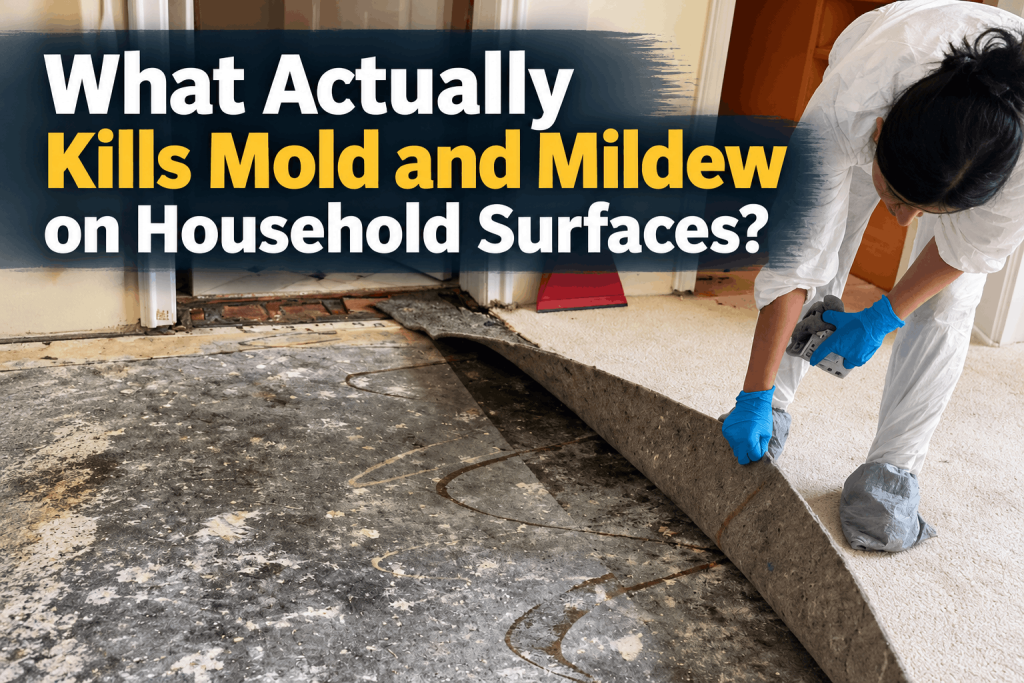
Drywall, carpet, ceiling tiles, and unsealed wood behave very differently than tile or glass. Mold growing on these materials often penetrates below the surface, which means surface cleaning, no matter how thorough, usually can’t fully eliminate it.
In most cases, mold-affected porous material needs to be removed and replaced rather than scrubbed and reused. Attempting to save contaminated drywall or carpet padding is usually a losing battle, part of why professionals in mold removal in Los Angeles often recommend removal over cleaning for these materials.
The Step Everyone Skips: Fixing the Moisture Source
Here’s the part that gets overlooked constantly. Killing visible mold does nothing long-term if the moisture problem causing it hasn’t been addressed. A leaky pipe, poor bathroom ventilation, or a roof issue will keep feeding new growth no matter how many times you clean the same spot.
This is really the foundation of effective mold removal in Los Angeles: treating the underlying cause, not just the visible symptom. Homes here deal with their own mix of humidity from marine layer moisture and older plumbing systems, which makes finding and fixing that source even more important.
Products Worth Knowing About (and Their Limits)
There’s no shortage of mold-killing sprays and solutions on store shelves, and figuring out which ones are actually worth using can get confusing fast. For a deeper breakdown of what’s genuinely effective versus what’s mostly marketing, check out our comprehensive blog post on “mold removal products.”
Generally speaking, no spray-on product replaces proper ventilation, drying, and moisture control. Products can help address what’s visible, but they can’t undo water damage already soaked into a wall or subfloor.
When DIY Cleaning Isn’t Enough
The EPA’s general guidance suggests mold covering less than about 10 square feet can often be handled by a homeowner with basic precautions. Beyond that size, or if mold stems from contaminated water, HVAC contamination, or significant health symptoms in the household, it’s time to call in mold removal services rather than continuing to scrub on your own.
Professional mold removal services bring proper containment, protective equipment, and testing most households simply don’t have access to, which matters a lot once an infestation grows beyond a small, manageable patch.
Signs You’re Past the DIY Stage
A few signals that it’s worth bringing in mold removal services instead of another round of vinegar and scrubbing:
- Mold keeps returning to the same spot despite repeated cleaning
- The affected area is larger than roughly 10 square feet
- There’s a musty smell without any visible mold you can locate
- Someone in the household has ongoing respiratory symptoms that improve when away from home
Any of these are reasonable signs that the problem has outgrown what surface cleaning alone can fix, and it’s worth looking into mold removal in Los Angeles before the issue spreads further.
Get the Moisture Fixed, Not Just the Mold Hidden
Understanding what actually kills mold matters, but it’s only half the equation; the other half is making sure it doesn’t come right back. At 24/7 Pro Restoration, we handle mold removal in Los Angeles by tracking down the moisture source first, then properly containing and addressing the mold itself, not just wiping away what’s visible today. If mold keeps showing up no matter what you try, let’s find out what’s actually causing it and get it handled for good.